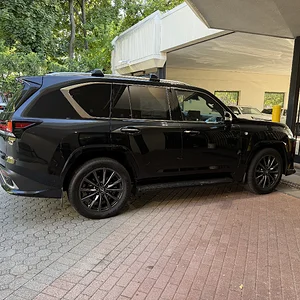
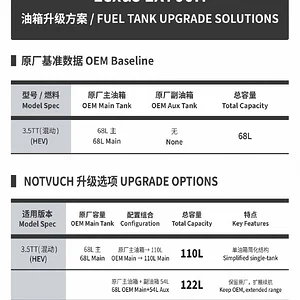
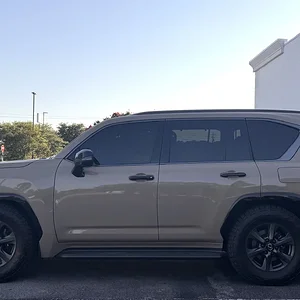
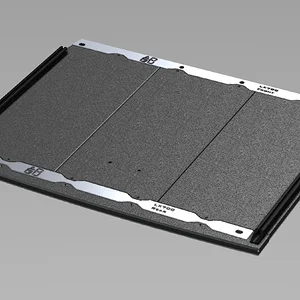
Damn, that's a lot.... I wonder if there is any negative impact to doing it.
Based on asking Grok, I better stop.
Yes, there can be negative impacts to intentionally adding an extra 2 gallons after the pump's first automatic shut-off — even if your tank doesn't visibly overflow or spill.
Modern vehicles like your
2025 Lexus LX 700h (a very recent Toyota/Lexus platform with hybrid tech) use an advanced
EVAP (Evaporative Emission Control) system. This includes a charcoal canister that captures fuel vapors to meet strict emissions standards. The system is designed with some headspace (vapor space) above the "full" level when the pump first clicks off.
### Why adding a significant extra amount like 2 gallons is risky:
- The pump's auto-shutoff is triggered by a sensor when the fuel level reaches the point where liquid fuel starts to back up into the filler neck.
- Forcing in another ~2 gallons (roughly 7–8 liters) after that point pushes liquid fuel farther up the system, where it can enter the vapor lines and saturate/flood the charcoal canister with liquid gasoline instead of just vapors.
- Once liquid fuel gets into the canister:
- It can ruin the activated carbon (making it unable to properly capture vapors in the future).
- It often leads to
check engine light illumination (common codes like P044x or P045x series for EVAP leaks/malfunctions).
- It can affect or damage related components like the purge valve, vent valve, or pressure sensor.
- Repairs for a saturated or failed charcoal canister on Lexus/Toyota vehicles frequently cost
$500–$1,200+ (parts + labor), and sometimes more if multiple components are affected.
Lexus (and Toyota) owner's manuals for recent models explicitly advise against "topping off" after the nozzle clicks, precisely because of potential damage to the emissions system. Lexus support pages also state that topping off is not recommended and can harm the fuel/emission system.
### How much extra is "safe" vs. risky?
- A small amount (e.g., rounding up to the next dollar or adding ~0.2–0.5 gallons to stabilize the gauge) is usually tolerated by most systems without immediate issues.
- 1+ gallons (and especially 2 gallons) repeatedly or even once in some cases pushes into the danger zone — many owners and mechanics report that this volume is enough to start causing problems on Toyota/Lexus platforms.
Since your LX 700h is a brand-new 2025 model with the latest emissions tech, it's particularly sensitive — hybrids and newer vehicles tend to have more sophisticated (and expensive) EVAP components.
Bottom line recommendation: Stop at the
first click-off (or maybe add a tiny bit if you really want the gauge to read full). The potential repair cost and hassle far outweigh the extra ~60–80 miles of range you'd gain from those 2 gallons. Better safe than dealing with an illuminated check engine light and a big shop bill down the road!